There is a style of art that was born in Tunisia and has since spread to every major city on earth. Most people who see it do not know where it came from.
What Is Calligraffiti?
Calligraffiti is the fusion of traditional Arabic calligraphy with modern graffiti technique. The letterforms of classical Arabic script — flowing, geometric, built on centuries of mathematical precision — are applied with spray paint, on walls, at scale.
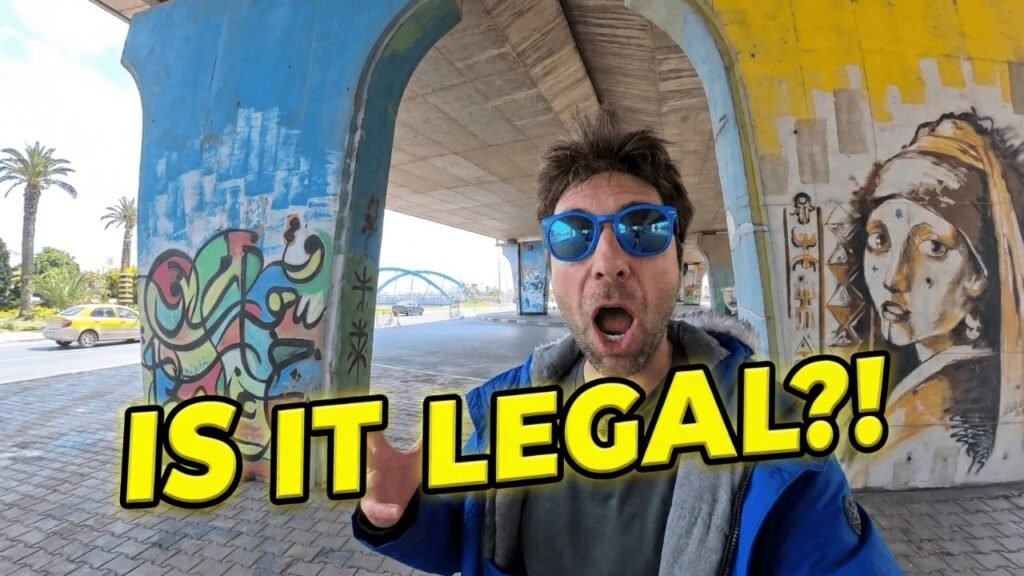
Tunisia is where this movement was born. The viaduct under the highway in downtown Tunis — Le Viaduc des Artistes — is where it was first made visible at scale.
Le Viaduc des Artistes
Under the highway bridges and on the concrete pillars of downtown Tunis, commissioned murals transform what would be grey infrastructure into a gallery of Berber symbols, Arabic poetry, political statements, and portraits of influential Tunisian figures.
The works address global political issues — support for Palestine, references to the Arab Spring — alongside purely aesthetic explorations of what Arabic letterforms can become when freed from the page.
The Themes
Tunisian street art carries weight that decorative murals in other cities do not. The 2011 revolution happened here. The political art that emerged from it is still visible on these walls — alongside newer work that is more abstract, more international, more concerned with technique than message.
Both are honest. Both are necessary.