
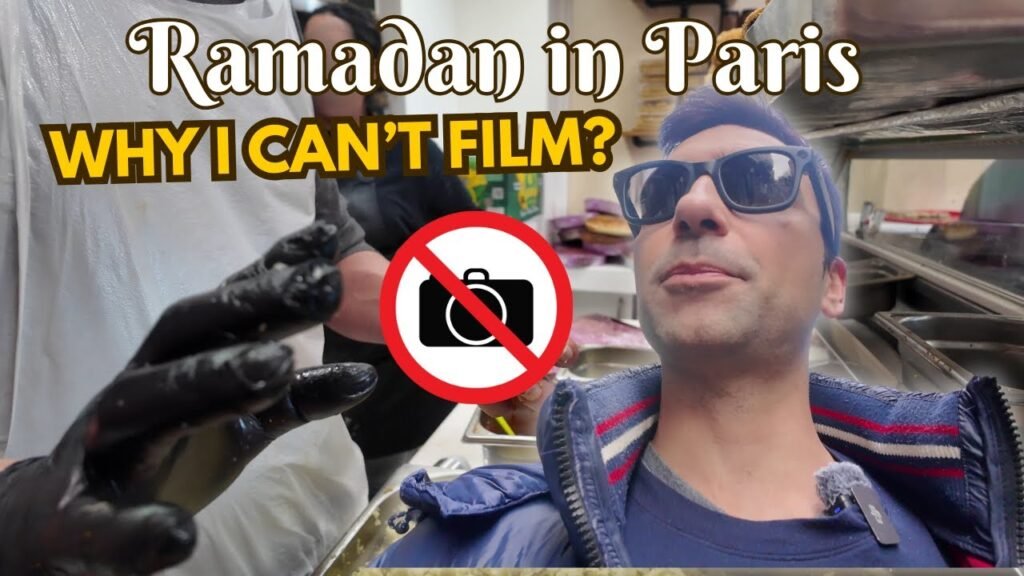
During Ramadan, two neighborhoods in Paris become something different. Belleville and Barbes, already vibrant at any time of year, transform into dense, fragrant corridors of North African and Middle Eastern food culture in the hour before iftar, the breaking of the fast.
I went on a weeknight in March, arriving about ninety minutes before sunset. The boulangeries orientales were already packed. The display cases were full of zlabia, the fried pastry dipped in syrup that comes in orange and yellow spirals. Msemen, the square Moroccan flatbread cooked on a griddle. Kesra, the Algerian round bread. Bambalouni, the Tunisian doughnut that is larger and more honest than anything you will find at any chain bakery.
The Fricasse sandwich deserves particular attention. It is a Tunisian street food that does not exist in this form anywhere else in Paris. A small fried bun, split open and filled with tuna, hard-boiled egg, potato, olives, capers, and harissa. It costs about two euros and it is better than most things you will eat for twenty.
The tradition of breaking the fast with dates comes from a specific practical reason. Dates provide immediate sugar to the blood after a day of fasting, and the body absorbs them quickly. Most shops in Belleville sell dates by weight during Ramadan, and the quality is significantly better than what you find in supermarkets.
One thing I noticed, and want to be honest about, is that filming in these neighborhoods requires sensitivity. Some shop owners are not comfortable being filmed, and that is their right. Use discretion. Ask before pointing a camera at someone. The experience of being in these streets during Ramadan is worth having on its own terms, without needing to document every moment.
If you are in Paris during Ramadan, spend one evening in Belleville between 6pm and 9pm. Eat something from a street stall. Watch the neighborhood come alive as the sun goes down.