
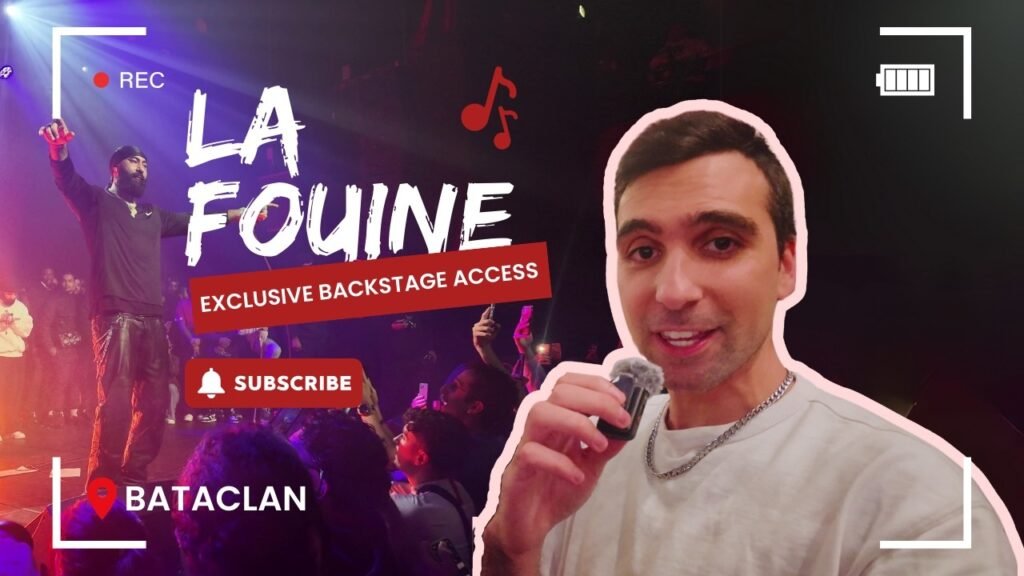
La Fouine has been absent from the Paris live music scene for long enough that his return to the Bataclan carried the weight of something significant. For a generation of French rap listeners he represents a specific era and a specific sound that formed the backdrop of adolescence.
I went to cover the show and managed to get access that allowed me to document the behind-the-scenes dimension of the evening, the atmosphere in the corridors, the fans gathering outside, the particular energy of a venue preparing for an artist returning after a long absence.
The crowd outside was predominantly the generation that grew up with his music, people in their late twenties and thirties for whom this concert was a reunion with something they had not expected to experience again. The nostalgia was visible and genuine.
Inside the venue, a family member of La Fouine spoke to me briefly about what this night meant. The personal dimension of a comeback concert, the complexity of returning to a stage after time away, was present in everything I observed backstage.
The show itself confirmed what his supporters had always believed about his live performance. The energy was sustained and the crowd’s knowledge of the material was total. A Bataclan audience that knows every word is a specific kind of pressure on a performer and he met it.
This concert was more than a music event. It was a reminder that some things in French rap culture do not disappear, they wait. La Fouine returning to the Bataclan was the proof of that.