
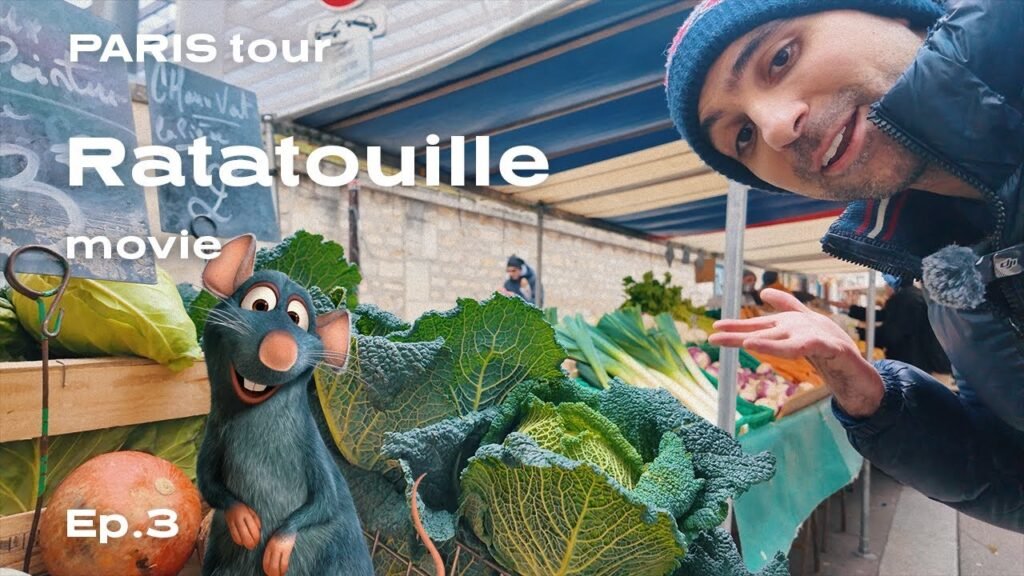
Ratatouille is one of the most visually accurate animated films ever made about Paris. The Pixar team visited the city extensively during production and based specific locations in the film on real places. I went to find them.
The market where Remy discovers great food in the opening sequence is based on the covered markets of Paris, particularly the Marche d’Aligre in the 12th arrondissement. It is one of the oldest and most affordable markets in the city, still packed every morning with local vendors selling vegetables, cheese, and prepared foods.
The exteriors of Gusteau’s restaurant are based on a real building in the 5th arrondissement. The inside of the restaurant, with its red banquettes and warm lighting, closely resembles the interiors of several classic Parisian brasseries, particularly around the Palais Royal area.
The Musee des Egouts, the Paris sewers museum, exists and is open to visitors. It is exactly as strange as the film suggests. The museum runs through actual functioning sewers and the smell is genuinely part of the experience. There is one thing the museum lacks that the film includes: any acknowledgment of rats. Given that the Paris sewer system was historically managed in part through its rat population, the absence is notable.
The building that inspired the pest control shop exterior in the film is a real shop on a Paris side street. Disney digitally scanned the facade for the film. The owner of the shop is legally prohibited from using any imagery associated with Ratatouille or any rat imagery on or near his business, because Disney owns those rights. The man whose building was used as inspiration for the film cannot profit from the connection in any way.
The Train Bleu restaurant inside the Gare de Lyon is the closest real location to the interior of Gusteau’s. It is one of the most ornate restaurant interiors in Paris, covered in paintings and gold, and it has been operating since 1901. You can eat there. It is expensive. The food is not as good as the setting.